Materials
What goes on top, and what it actually costs you over forty years
The covering is the part of a roof people choose and the part least likely to fail first. It still matters — for weight, for lifespan, for how the building looks and for whether solar can be attached without piercing the waterproofing. Here is each option with its trade-offs stated rather than hidden.
| Material | Service life | Weight | Price band | Best for |
|---|---|---|---|---|
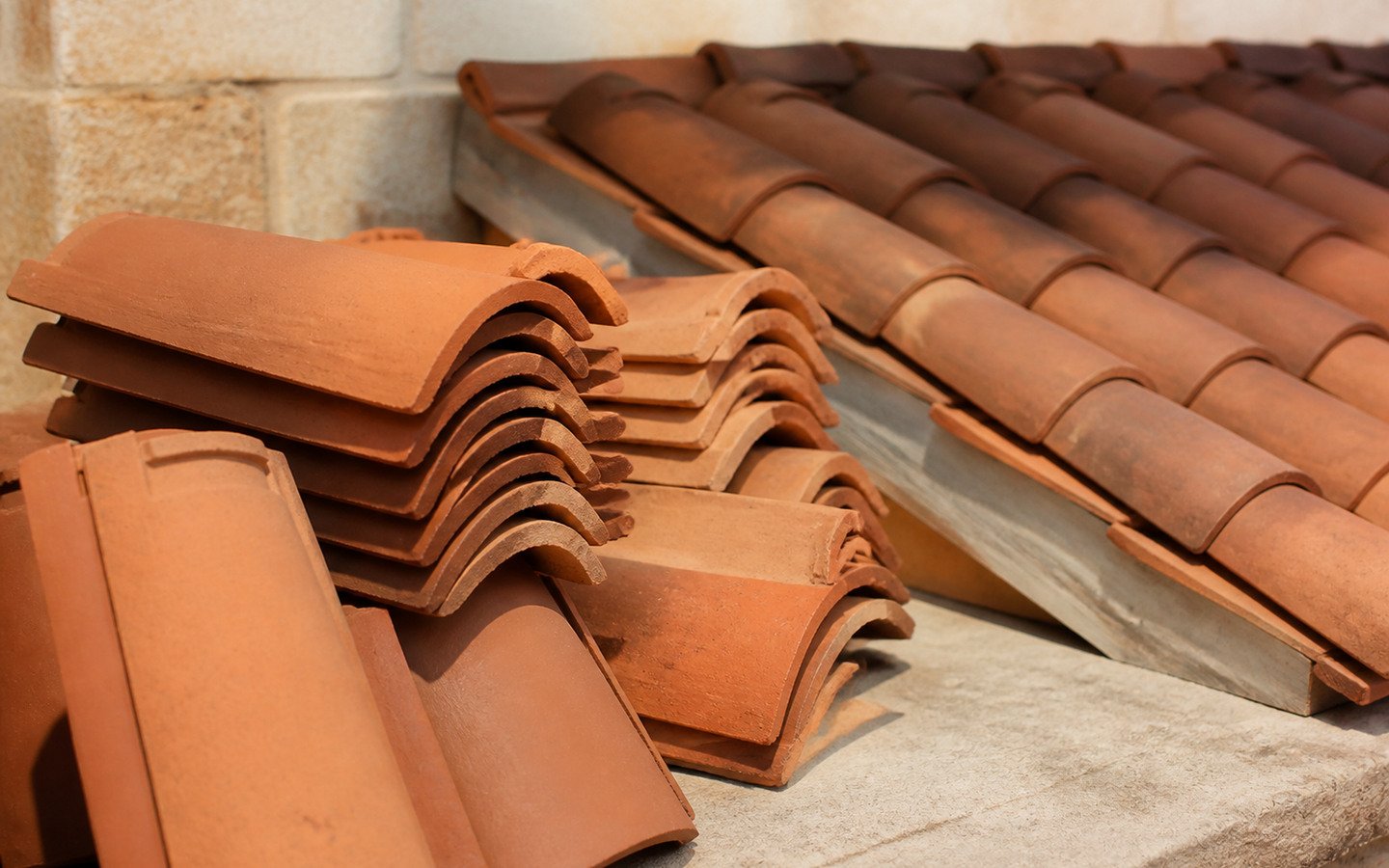
| Clay tile | 50+ years | 40–60 kg/m² | €€–€€€ | Traditional pitched roofs, heritage and landscape-constrained buildings, and anywhere the roofscape is part of the architecture. |
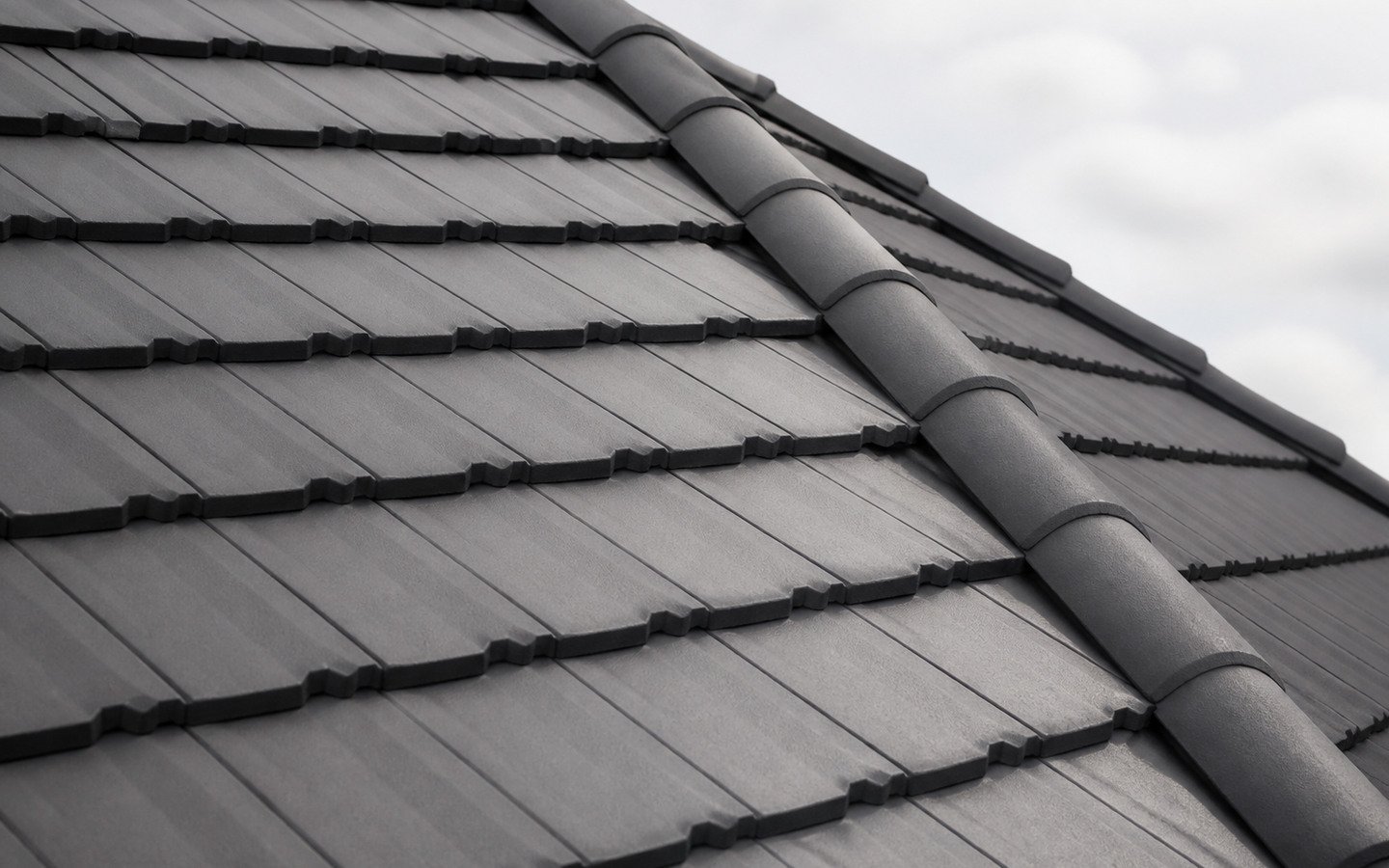
| Concrete tile | 40–60 years | 45–65 kg/m² | €€ | Large suburban roofs where cost per square metre matters and the profile choice is open. |
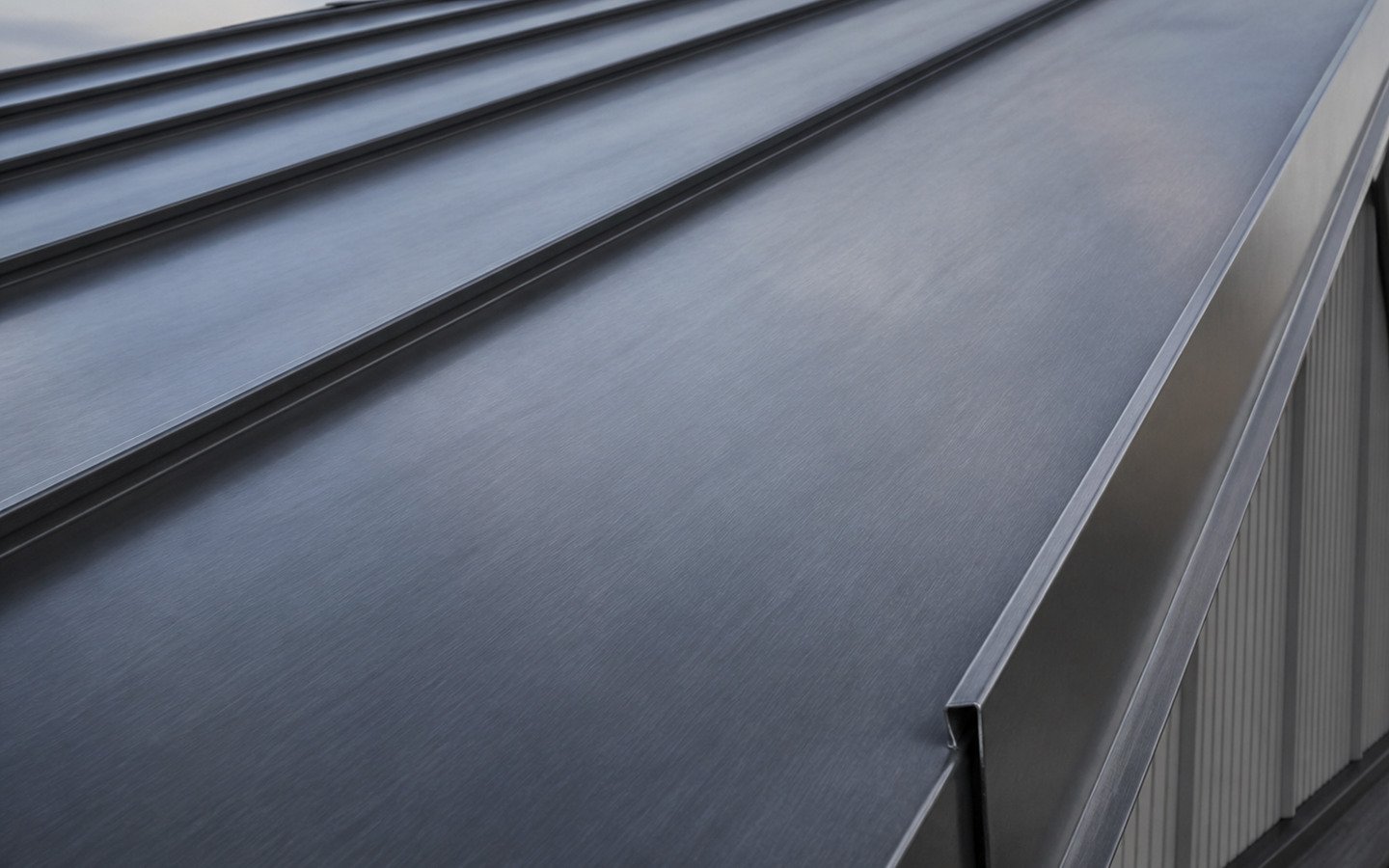
| Standing-seam metal | 50+ years | 5–8 kg/m² | €€€ | Low pitches, complex geometry, alpine exposure, and structures that cannot take a heavy covering. |
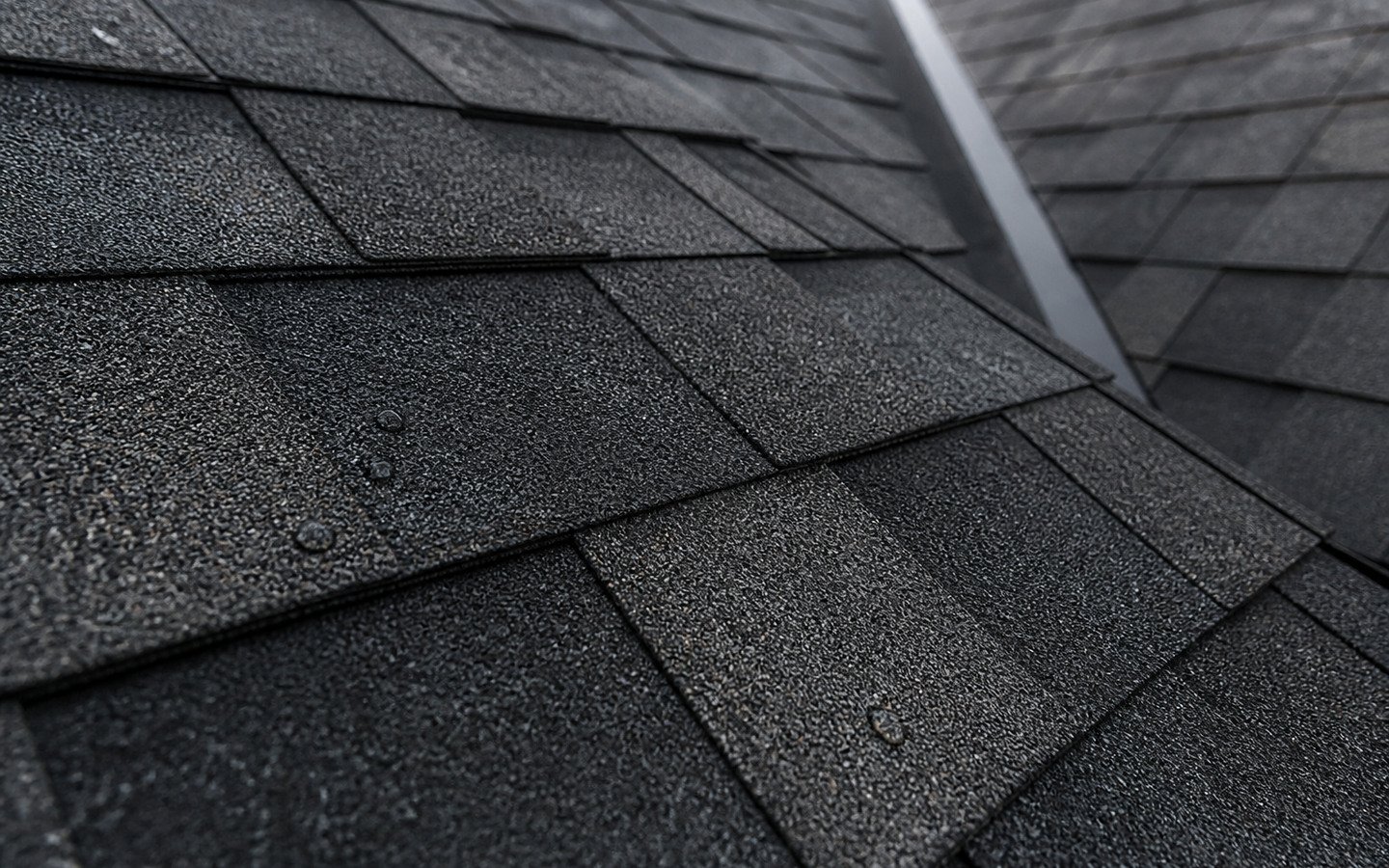
| Bitumen shingle | 25–35 years | 10–14 kg/m² | € | Outbuildings, dormers, curved and irregular roof forms, and budget-constrained replacements. |
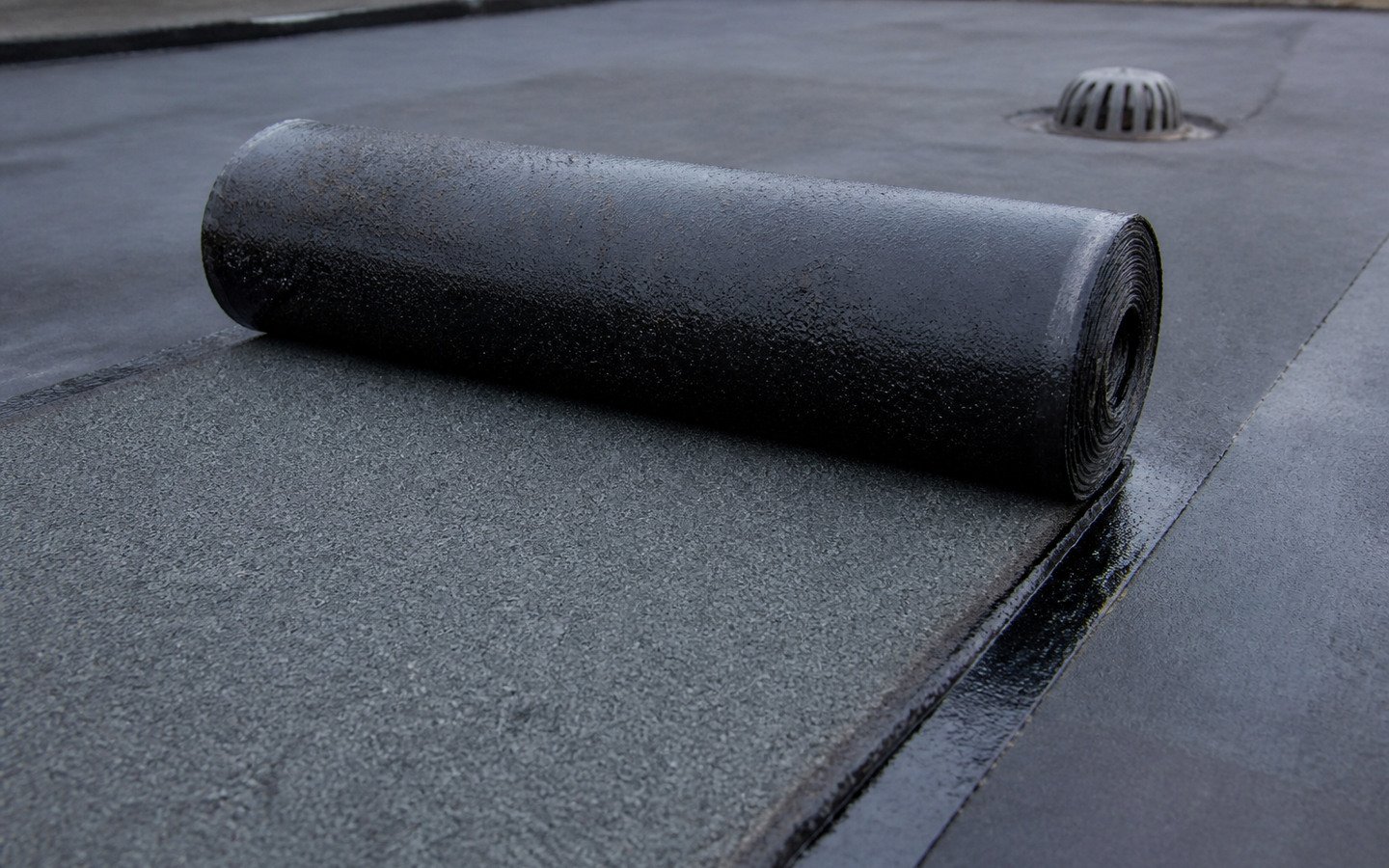
| Bituminous membrane | 20–30 years | 8–12 kg/m² | €€ | Flat and low-pitch roofs, especially where a robust multi-layer build-up is wanted. |
| Synthetic single-ply membrane | 25–35 years | 2–4 kg/m² | €€ | Large flat roofs, warm-roof build-ups, terraces and green roof constructions. |
- Service life
- 50+ years
- Weight
- 40–60 kg/m²
- Price band
- €€–€€€
Clay tile
Clay remains the reference covering across all three of our markets and the default where a building has any architectural sensitivity. Its real advantage is not the tile but the maturity of the system around it: the accessories, the ventilation components, the fixing specifications and — increasingly — purpose-made PV mounting interfaces that let an array go on without breaking a tile. Where a roof is going to be looked at as well as rained on, this is usually the answer.
Strengths
- The longest realistic service life of any mainstream covering
- Colour is fired through the body, so it does not fade to a different roof
- Manufactured locally in Slovenia and across the region — no import lead-time risk
- Guarantees of up to 33 years marketed on qualifying ceramic products
- Frost and UV resistant, and available in bora-rated fixing specifications
- The only credible answer where coppi or a matching traditional profile is required
Trade-offs
- Heavy — a change from a lightweight covering needs a structural check
- Individual tiles are brittle under foot traffic and impact
- Higher material cost than concrete for a visually similar result
- Complex geometry needs many cut tiles and more labour
- Service life
- 40–60 years
- Weight
- 45–65 kg/m²
- Price band
- €€
Concrete tile
Concrete tile is the workhorse of the pitched roof market and, on a large straightforward roof, the most rational use of a budget. The system ranges behind it are excellent — insulation, ventilation, snow retention and PV integration all designed to work together and covered by a single system guarantee. Where the roof is not architecturally sensitive and the area is large, the money saved against clay is often better spent on the insulation layer underneath.
Strengths
- Noticeably cheaper than clay for a comparable profile
- Very complete system ranges, including full PV-compatible offerings
- 30-year system guarantees available on qualifying build-ups
- Consistent dimensions make laying faster and cheaper
- Strong performance under snow load with the right fixing
Trade-offs
- Surface colour weathers and lightens over the first decade
- As heavy as clay, so the structural check still applies
- Less accepted in heritage and landscape-constrained contexts
- Service life
- 50+ years
- Weight
- 5–8 kg/m²
- Price band
- €€€
Standing-seam metal
Metal is where the sheet-metal trade and the roofing trade converge, and it rewards good detailing more than any other covering. Its structural lightness solves problems nothing else can — an old frame that will not carry tile, a pitch too shallow for discrete units, a geometry full of hips and valleys. For solar it is quietly the best substrate available, because a seam clamp attaches an array to the roof without ever piercing the waterproofing.
Strengths
- A fraction of the weight of tile — often the only option on a marginal structure
- Works at pitches where discrete tiles simply cannot be used
- Continuous seams mean far fewer places for wind-driven rain to enter
- Excellent under storm and high wind exposure
- Aluminium products carry guarantees up to 40 years and are fully recyclable
- Seam clamps let PV mount without a single penetration through the covering
Trade-offs
- Highest material and labour cost of the pitched options
- Sheds snow readily — snow retention is effectively mandatory in alpine locations
- Needs a proper acoustic and thermal build-up beneath it, not just a deck
- Requires genuinely skilled sheet-metal labour, which is scarce
- Service life
- 25–35 years
- Weight
- 10–14 kg/m²
- Price band
- €
Bitumen shingle
Shingle earns its place on secondary buildings, on shapes that defeat rigid coverings, and where a structure genuinely cannot carry more weight. What it does not do is match the working life of tile or metal, so specifying it on a main roof is a decision to replace that roof again in a generation. Where it is the right answer, the substrate and ventilation beneath it matter more than the shingle itself.
Strengths
- Lowest installed cost of the pitched coverings
- Light enough to go onto almost any existing structure
- Handles curves and complex forms that rigid units cannot
- Fast to install, which shortens the exposure window
Trade-offs
- Shortest service life of the options here by a clear margin
- Surface granules degrade under sustained UV exposure
- Less resilient to hail than tile or metal
- Rarely acceptable in heritage or landscape-constrained settings
- Service life
- 20–30 years
- Weight
- 8–12 kg/m²
- Price band
- €€
Bituminous membrane
The traditional flat roof answer, and still a very good one when the build-up is properly designed. Its redundancy is a real advantage: a defect in one layer does not immediately become water in the building. As with every flat roof, the outcome is decided at the upstands and outlets rather than in the middle of the field, which is where we spend the detailing budget.
Strengths
- Multi-layer systems give genuine redundancy against a single point failure
- Very well understood detailing at upstands, outlets and penetrations
- Tolerant of foot traffic during maintenance
- Mineral-finished top layers handle UV well
Trade-offs
- Torch-applied systems carry fire risk and need proper controls
- Heavier and thicker than single-ply alternatives
- Laps and detailing are labour-intensive and skill-dependent
- Service life
- 25–35 years
- Weight
- 2–4 kg/m²
- Price band
- €€
Synthetic single-ply membrane
Single-ply is the modern flat roof default and, correctly welded, an excellent system. Because there is no second layer to catch a defect, we test rather than assume: electronic leak detection before finishes go down is available on any project and is standard on terraces and green roofs, where finding a puncture afterwards means lifting everything above it.
Strengths
- Very light, which matters on a deck with little spare capacity
- Fast to install over large areas with few seams
- Hot-air welded seams with no open flame on site
- Root-resistant grades available for green roof build-ups
- Reflective finishes available for hot-climate roofs
Trade-offs
- Single layer means no redundancy — a puncture is a leak
- Welding quality is everything and is entirely installer-dependent
- More vulnerable to mechanical damage from traffic and dropped tools
Start with the survey. Decide after you have read it.
A fixed-fee survey, a written condition report with annotated photographs, a realistic remaining service life and a costed action list. Credited in full against your project if you go ahead — and still useful if you do not.
Water coming in right now? Mark the enquiry urgent or write to hello@roofpruf.com, and stay off the roof — do what is safe from inside while we read it.